


If your dentist has spotted the beginnings of decay, you’ve probably wondered whether you can turn it around before it needs a filling. The honest answer is: sometimes, yes. It depends entirely on how far the decay has gone, and it hinges on a natural process called enamel remineralization.
This guide explains what that process is, the point of no return every patient should know about, and how the main remineralizing products — fluoride, hydroxyapatite and calcium phosphate systems — compare.
First, the myth to clear up
Plenty of articles online promise you can “regrow” enamel. You can’t. Enamel contains no living cells, so unlike bone or skin, your body cannot make more of it once your adult teeth have formed. Any enamel you lose to erosion or drilling is gone for good.
What your teeth can do is re-harden enamel that has been softened by acid but hasn’t yet broken. Acid pulls mineral out of the tooth; saliva puts mineral back in. That second half of the cycle is remineralization, and it runs in your mouth every single day without you noticing.
The 5.5 rule: how decay actually starts
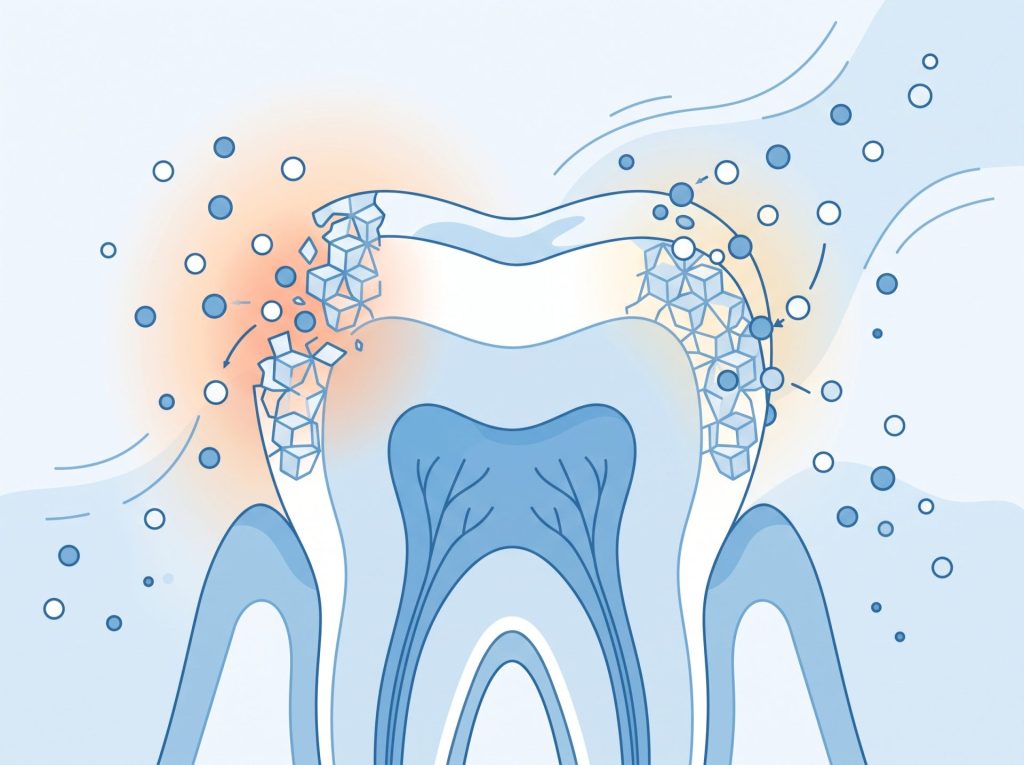
The whole battle turns on pH. Whenever the environment around a tooth drops below roughly pH 5.5, the enamel surface starts to dissolve. Calcium and phosphate ions drift out of the crystal structure and into your saliva.
What pushes the pH down? Two things:
- Plaque bacteria feeding on sugar. Every sugary snack or drink gives them fuel, and they produce acid for around 20–40 minutes afterwards.
- Acid arriving directly. Fizzy drinks, fruit juice, wine and stomach acid from reflux all attack enamel without any help from bacteria.
Once the acid clears and pH climbs back up, saliva’s dissolved calcium and phosphate move back into the weakened enamel and harden it again. A healthy mouth flips between losing and regaining mineral many times a day and comes out even.
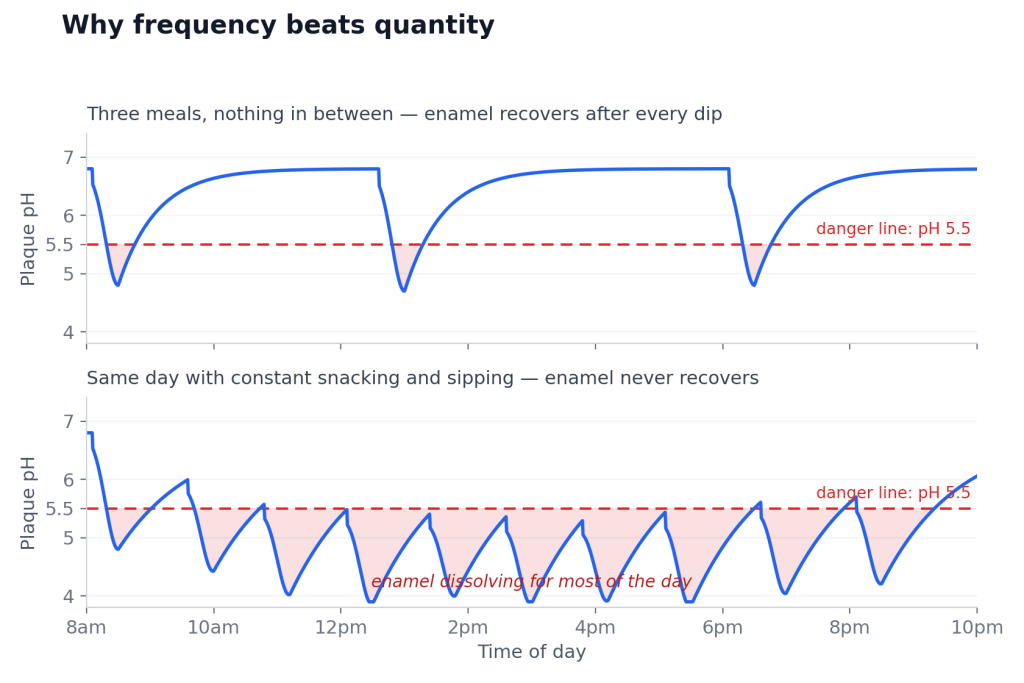
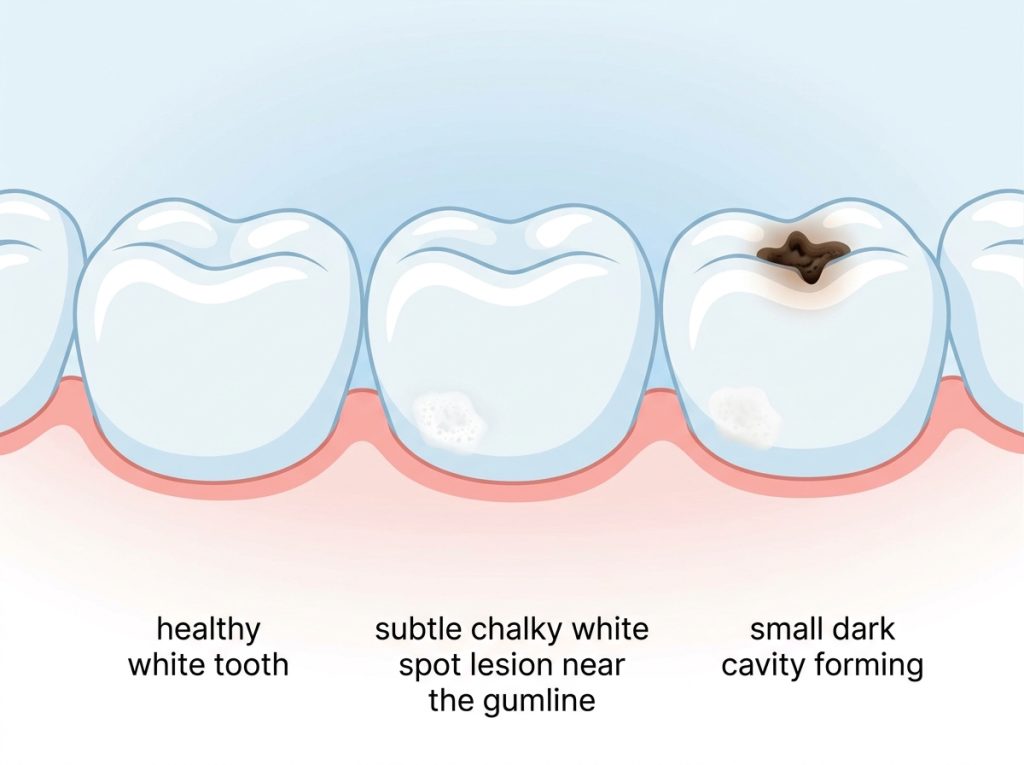
Decay begins when the sums stop balancing. If you sip a soft drink across a whole afternoon or graze on snacks all day, the pH never recovers, and the tooth loses more mineral than it gets back. The enamel just under the surface becomes porous — and eventually shows up as a dull, chalky white patch.
The point of no return
That chalky white spot is the crossroads. At this stage the enamel surface is still intact — porous and weakened, but unbroken. This is called a non-cavitated lesion, and it can genuinely reverse. Stop the acid attacks, boost the mineral supply, and the lesion re-hardens over weeks to months.
But if demineralization continues, the weakened surface eventually collapses into an actual hole: a cavity. From that moment, no product, diet or routine will repair it. A cavity needs a dentist, and the sooner you go, the smaller and cheaper the filling.
So when people ask “can you reverse a cavity?”, the precise answer is: you can reverse the stage before a cavity, and that window may be open for months. Early check-ups matter because your dentist can spot a white spot lesion long before you feel anything.
Comparing the remineralizing options
Modern oral care offers three main ways to top up the mineral side of the equation.
Fluoride
The long-standing standard. Fluoride doesn’t add bulk mineral; it changes the chemistry of the repair. When enamel remineralizes in the presence of fluoride, it forms fluorapatite — a more acid-resistant version of the original crystal. Fluoride toothpaste has decades of evidence behind it and remains the default recommendation from the NHS and the American Dental Association alike.
Hydroxyapatite
The newer contender takes the opposite approach: instead of modifying the crystal, it supplies the raw material. Enamel is about 97% hydroxyapatite — a crystalline calcium phosphate — and synthetic versions of the same mineral can deposit onto the tooth surface, plug microscopic defects and act as a slow-release reservoir of calcium and phosphate.
Japan approved hydroxyapatite as an anti-caries ingredient back in 1993, and several randomized clinical trials over the past decade have found hydroxyapatite toothpastes performing on par with fluoride at preventing and reversing early lesions. It’s also safe to swallow, which is why it has become popular for young children and for people who want a fluoride-free routine.
Particle size makes a practical difference. Nano-sized particles — around 60 nanometers — are small enough to penetrate the pores of a demineralized lesion rather than just coating the surface. You’ll find nano hydroxyapatite in a growing number of premium toothpastes, typically at around 10% concentration. A cheaper route some people take is buying pure nano hydroxyapatite powder and adding a small pinch to whatever toothpaste they already use — you control the dose, without paying premium-paste prices or taking on the foaming agents and flavourings that come with them.
Calcium phosphate systems (CPP-ACP)
Sold under names like Tooth Mousse and MI Paste, these products use milk-derived casein proteins to hold calcium and phosphate in a form that stays dissolved and available at the tooth surface. Dentists often recommend them after whitening or for patients with white spots after braces. They’re effective, though people with dairy allergies need to avoid them.
What actually moves the needle at home
Products help, but the biggest wins come from habits:
- Cut the frequency of sugar and acid, not just the amount. Keep sweets and fizzy drinks to mealtimes. Between meals, stick to water.
- Don’t brush straight after acid. Enamel is at its softest right after a citrus drink or reflux episode. Rinse with water and wait 30 minutes.
- Keep saliva flowing. Chew sugar-free gum after meals. If your mouth is dry from medication or mouth-breathing, tell your dentist — dry mouth quietly multiplies decay risk.
- Brush last thing at night and spit, don’t rinse. Whatever remineralizing ingredient you use, leaving a thin film on the teeth overnight gives it hours to work.
When home care isn’t enough
Remineralization is powerful, but it has limits. See a dentist promptly if you notice a white spot that’s turned brown or feels rough, new sensitivity to cold or sweet things, or any visible hole or shadow in a tooth. High-risk patients — dry mouth, frequent snacking, a history of fillings — may also be offered high-fluoride prescription toothpaste or varnish, which sit alongside, not instead of, everything above.
The bottom line
Enamel can’t grow back, but softened enamel re-hardens every day if you let it. Catch decay at the white-spot stage, cut the acid hits, and keep the mineral supply steady — whether from fluoride, hydroxyapatite or both. Do that, and many early cavities simply never happen.