


Can you get tooth implants on the NHS, and what is the cost for dental implants on NHS?

Tooth implants are a permanent, long-lasting option to replace missing teeth, but the tooth implants cost in the UK on NHS make them unaffordable for many people. It’s therefore unsurprising that so many Brits are wondering whether you can get tooth implants on the NHS, and if so, how to get them.
There is no need to worry about extensive research anymore. In this article, we’ll cover the:
- Can you get dental implants on the NHs
- Criteria for NHS tooth implants
- How to get free dental implants on NHS (If possible)
- Tooth implants cost on the NHS
- Alternative ways to lower the price of this treatment
- Full mouth dental implants cost nhs
We hope that this article answers all the questions that you may have about getting tooth implants on the NHS.

Save the trip to your NHS dentist and speak to a certified dentist right now online about dental implants on the NHS. Visit JustAnswer to chat online with a qualified dentist and find out all the information you need – without having to take time out for a dental appointment.
Their dentists are based in the US and are available 24/7 to help you out!
Can you get tooth implants on the NHS?
Yes, the NHS offers tooth implants primarily to patients with a clear medical need. Patients must be prioritized according to their medical needs since implant treatment is expensive and there is only a limited budget to supply them.
For this reason, many people who would like NHS implants will not be eligible. It is then advised to rather settle for available dental treatments or opt for private dental care.
This guide, published by the Royal College of Surgeons in 2019, lays out the complete eligibility criteria for NHS-funded tooth implants. It is , however, 20 pages long. If you’re short on time, we summarised all the key points below about getting dental implants on NHS.
You can watch the video below for an even shorter answer:
NHS tooth implant criteria summarised
The main patient groups who will be prioritised for dental implants on the NHS are as follows:
Patients with missing or malformed teeth because of inherited, genetic conditions
Individuals who have hyopdontia, or congenitally missing teeth, are often the best candidates for NHS tooth implants. Additionally, if you need full mouth implants on the NHS you may be prioritized, whereas those needing just a single tooth replaced may be offered a bridge instead. Another reason you may get dental implants on the NHS is if you have missing teeth from being born with a cleft palate or lip.
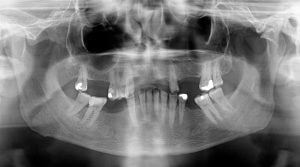
Other rare genetic conditions cause imperfections in tooth size, shape and structure too. These teeth may not be suitable to support a bridge or denture for other missing teeth or may need to be extracted.
Finally, people with inherited aggressive periodontitis often lose their teeth early in life. Once the condition is under control, they may be allowed to get implants.
Patients who have lost teeth because of trauma or an accident
This is another common reason that patients may be referred for NHS implants. Significant facial trauma can damage teeth, gum tissue and supporting bone, resulting in immediate or eventual tooth loss.
There’s unfortunately no guarantee that you will be accepted for tooth implants on the NHS after trauma, as the guidelines still recommend exploring conventional tooth replacement methods first.
Get a free quote for dental treatment abroadPatients who have lost teeth because of other medical treatments
People with head and neck cancer and certain other conditions may have to have teeth removed as part of their treatment. Additionally, chemotherapy is known to affect the salivary glands and this, in turn, may worsen existing tooth decay and other oral health problems.
In the case of tooth loss for any of these reasons, patients may be eligible for NHS teeth implants.
Patients who are missing all their teeth in one or both jaws and can’t wear dentures

The guidelines acknowledge that edentulous patients (who have no teeth) in one or both jaws may have trouble wearing dentures because of changes to the shape of their jawbone.
To be considered on this basis, the patient must first be assessed by an expert in restorative dentistry or prosthodontics. This expert will check that their dentures are technically a good fit, and confirm that all conventional options have been exhausted and deemed unsuccessful.
It is important to note that only patients who are physically unable to wear dentures will be considered.
There are some other categories, such as people with extremely dry mouths and those who need an implant as an anchor for orthodontic work. If you think you may be eligible on some other basis, you can enquire with your dentist to find out more.

We look forward to being able to help you save up to 70% on the dental care you need!
Other considerations for eligibility
As well as meeting one of the criteria above, patients must satisfy certain other conditions before they will be considered for tooth implants on the NHS. They must:
- Be registered with a general dentist to receive regular checkups and ongoing care
- Have no untreated tooth decay, gum disease or failing restorations
- Comply with the care needed to maintain good oral hygiene
- Be a non-smoker
Smoking and tobacco use are known to increase the chances of complications and failure in tooth implants. If you have not smoked in over three months, you are more likely to be accepted as an implant candidate. But if you’re found to be smoking during your implant treatment, it may be suspended until you quit again.
Your age may also influence whether you are accepted, and on what level of priority you are. Generally, implants won’t be placed before the age of 18 because the face is still developing. There is no upper age limit for dental implants on the NHS, but your ability – both mental and physical – to care for your teeth in the future will be taken into consideration.

There are several reasons why patients can be denied eligibility. It may be because of a greater risk of complications or an inability to comply with oral care requirements.
Some of these reasons include:
- Poorly controlled diabetes
- Active bisphosphonate treatment
- Mental health issues
- Blood, bone and immunodeficiency disorders
- Poor dental health
- Bruxism (teeth grinding)
Do you have questions about your eligibility for dental implants on NHS? Visit JustAnswer to chat online with a qualified dentist and find out all the information you need – without having to take time out for a dental appointment. Their dentists are based in the US but are available 24/7 to help you out.
Can you get All-on-4 dental implants on the NHS?
The All-on-4 system uses just four implants to secure a full set of false teeth. This is a popular solution for people wanting to save money on full-mouth implants, but it is rarely offered on the NHS.
In the case of missing all your teeth in one or both jaws, you are more likely to receive denture implants on the NHS that secure an overdenture with only two implants. Your gums still bear some pressure when you bite down on the implants, but they keep the dentures in place securely.
Tooth implants cost on the NHS UK
NHS tooth implants are charged according to standard NHS dental fees. For some people, this means NHS dental implants are free. Others will have to pay fees of:
- £282.80 in England (the Band 3 treatment fee)
- £203 in Wales (the Band 3 treatment fee)
- £384 in Scotland and Northern Ireland (the maximum charge)
The good news is that fees apply per treatment course. Whether you need a single tooth implant or a full mouth, you’ll pay the same. That’s right — the full mouth dental implants cost NHS is the same as it is for a single tooth.
Note that once your treatment is complete, you will be responsible for the cost of regular checkups and any follow-up treatment you may need. If you later need a replacement crown or one of your implants fails, there is no guarantee that the NHS will fund a replacement.
How to apply for tooth implants on the NHS

It’s best to visit your usual NHS dentist for an initial assessment, after which they will refer you for a further assessment by the local facility providing the implants provided that you meet the criteria.
Some dental hospitals allow you to apply directly. However, since there is no centralised process for applying for NHS tooth implants, it’s best to go via your dentist.
You can expect to wait several months between your initial referral and your next assessment. The waiting list for accepted candidates can take over a year. If you don’t want to wait this long to replace your missing teeth, you’ll need to consider private treatment.
It’s worth noting that each local NHS Foundation Trust has its own guidelines for referrals. Although the criteria mentioned above are national guidelines, the exact requirements and exclusions in each area can vary. Each local area is subject to its own funding restrictions, too.
Other ways to fund your teeth implants
It will be necessary to look for ways to fund your own tooth implants if you’re not eligible for them on the NHS, or if dental implants on NHS are too expensive.
Thanks to the high cost of implants in the UK, which is around £2,300 each, many Brits are travelling to other countries for dental work. Some are going to Turkey, Spain, or Hungary — all popular destinations thanks to their low cost of treatment and the high quality of care.
You can pay up to 50 to 70% what you would pay for dental implants on the NHS in the UK. Even factoring in the cost of flights and accommodation, it can mean a big saving; especially if you need costly treatment like All-on-4.
To find out more about how this works, you can visit DentalyGo. Their dental tourism service puts you in touch with reputable dental clinics abroad that meet strict quality standards. Alternatively, fill in your details below to request a free quote.
We look forward to being able to help you save up to 70% on the dental care you need!
Travelling abroad still comes with its own risks. You can read our full dental tourism guide to learn more about the pros and cons.
If you’d rather stay closer to home, it’s certainly worth getting quotes from a few different dentists, since there can be considerable variation between practices. Our cheap dental implants page has more tips for finding a good price. A loan or payment plan could also help make your treatment more affordable.
It may even be possible to get free dental implants by volunteering for a clinical trial or approaching a dental school, but these opportunities are unfortunately rare.
Alternative NHS treatments
People missing one, several or all of their teeth do have other options for NHS teeth replacements.
Dentures are the most common solution as they are relatively cheap and incredibly versatile. They can be used to replace any number of teeth and look quite natural. Some people do have problems wearing dentures, but often a reline or good denture adhesive can help them fit more securely.
There is also the option of a dental bridge to replace a single tooth or two in a row. This is a fixed, long-term restoration. TUnfortunately, some healthy enamel must be removed from the anchor teeth. If you’re planning to get a tooth implant in the future, a bridge may not be the best option as you’ll then need to crown the adjacent teeth.
These restorative solutions should be available to any NHS patients who need them, so they are much easier to access than teeth implants.
Conclusion
The simple way to know if you can get tooth implants on the NHS is to ask yourself this: Are you missing teeth for reasons beyond your control, like a medical condition or facial trauma? In this case, you may well be able to get NHS implants; you’ll just have to be patient about going through the system.
If you need implants because of poor oral health in the past, you are less likely to be accepted as a candidate. Regular smokers are also highly unlikely to be considered. The best option is to consult your dentist about your eligibility.

FAQs
Dental implants on the NHS are typically available for patients with severe dental issues, such as tooth loss due to injury, disease, or congenital conditions. NHS funding is limited to cases where implants are necessary for oral health, not for cosmetic reasons. Eligibility is determined by a dentist after a thorough evaluation of your specific needs.
Dental implants are not usually provided for free on the NHS unless you meet certain health criteria. Typically, they are offered only when the loss of teeth is causing significant health problems, such as difficulty eating or speaking. If eligible, NHS coverage will help with the cost, but free implants are rare.
The cost of dental implants on the NHS varies based on individual circumstances, but they can be expensive. NHS pricing is often lower than private clinics, but you’ll need to meet specific criteria to qualify. If approved, the cost may be subsidized, depending on your health condition and local NHS policies.
To apply for dental implants on the NHS, you must first visit your GP or NHS dentist. If they determine you’re eligible for implants due to health reasons, they’ll refer you to a specialist. From there, you’ll undergo assessments to confirm your eligibility.
While the NHS does not have a fixed cost for dental implants, the price is typically much lower than private treatment. Costs range from £2,000 to £2,500 per implant, but this may be subsidized if you meet certain medical criteria. Always check with your local NHS authority for more accurate figures.
To get dental implants on the NHS, you must be referred by a dentist who assesses your medical condition. If the loss of teeth is causing significant health problems, NHS dental services might approve the implants. You’ll need to meet eligibility requirements based on medical necessity, not for cosmetic reasons.
NHS coverage for dental implants is limited to specific cases. The NHS will cover the cost if you have significant dental health issues, such as severe tooth loss caused by medical conditions. However, implants purely for cosmetic purposes are not typically funded. Eligibility is assessed on a case-by-case basis.
Royal College of Surgeons: Guidance on the Standards of care for NHS-funded dental implant treatment 2019. Consulted 28th January 2020
British Dental Journal: The provision of dental implants: current practice among university and hospital specialists in restorative dentistry within the UK and Ireland. Consulted 28th January 2020
Royal College of Surgeons of England Annals: Does the Referral and Selection for NHS-Funded Dental Implant Treatment in the UK Follow National Guidelines? Consulted 28th January 2020
Journal of International Society of Preventive & Community Dentistry: Smoking and dental implants. Consulted 28th January 2020