





Having more teeth than normal is a condition known as hyperdontia, or supernumerary teeth. Children usually have 20 teeth and by adulthood the normal number of teeth is 32, but up to 3% of people have extra teeth growing somewhere in their mouths.
Hyperdontia is one of the less common dental problems you might come across, so it can be worrying to hear that you or someone you know have supernumerary teeth. Here we’ll try and put your mind at rest by explaining:
- The different words that are used to talk about hyperdontia
- Why someone might develop extra teeth
- What problems you might experience with supernumerary teeth
- The various options for treatment, if required
Once you’ve read this article, we hope you have a much clearer understanding of hyperdontia and you’ll be confident talking to your dentist about dental care for your child or yourself.
What is hyperdontia?
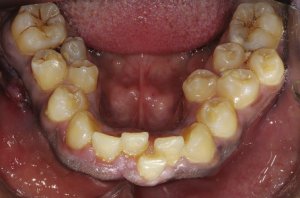
Hyperdontia, or supernumerary teeth, simply means having more teeth than normal – How many teeth do we usually have? These teeth can appear anywhere in the mouth. Around 98% of the time, hyperdontia patients have extra teeth growing in the upper jaw.
Hyperdontia can be detected either by sight – if you or your dentist can see extra teeth growing where you wouldn’t expect them – or by x-ray. An x-ray will show teeth that are still waiting to come through. Sometimes your dentist might do a CT scan to understand more about the positioning of multiple supernumerary teeth.
There are quite a few different terms that dentists might use to talk about hyperdontia. Here are a few of the most common ones to help you better understand a diagnosis:
Types of extra teeth
- Supplementary: Teeth that are normal in shape and size
- Tuberculate: Teeth that are more barrel-shaped
- Conical: Teeth that are peg shaped, or pointy
- Compound and complex odontoma: Either a collection of teeth-like growths or a mass of tooth-like tissue
Positions of extra teeth
- Mesiodens: Extra teeth in the roof of the mouth. Between 0.15% and 4% of patients have this type of extra tooth, which grows behind the normal front teeth.
- Paramolars: Extra teeth in the gums, growing on the inside or outside of normal teeth. They are less common and less noticeable since they grow around the molars at the sides of your mouth.
- Distomolars: Extra wisdom teeth that grow in line with your other teeth. Having extra wisdom teeth is pretty rare and they hardly ever erupt. A dental x-ray can identify them, and the first symptom of extra wisdom teeth is likely to be tooth pain. Having a fifth, six, or even seventh molar has been reported but it’s extremely rare.
What causes extra teeth?
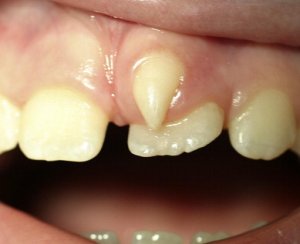
There are a few different things that are known to cause extra teeth in gums and the roof of the mouth. One of the main causes is genetics, so if family members have them, their children might as well.
About 3% of the general population have at least one extra tooth, but studies show that men are around 50% more likely to have supernumerary teeth than women. Interestingly, women are more likely to be missing teeth; this is called hypodontia and you can read all about it in our article about congenitally missing teeth.
Hyperdontia is easy to diagnose if the extra teeth have already grown in. If not, they will appear on an X-ray during a routine dental check-up.
Many people with hyperdontia don’t need any treatment, especially if they only have one extra tooth. But sometimes the condition causes pain, problems with chewing and eating, or makes it difficult to brush and floss which could lead to cavities and gum disease. Patients may also be self-conscious if the extra teeth are visible when they smile. In these cases, extraction is the most likely course of action to be recommended.
Orthodontic work may also be necessary in conjunction with extraction if the remaining teeth are crooked or if a gap is present.
Eric Scharf, DDS, 7×7 Dental Implant & Oral Surgery Specialists
There are some medical conditions that increase the chances of having extra teeth, too. Noticing extra teeth in your mouth might be the first symptom, so if you are concerned you can ask your dentist whether you should be referred to a doctor for further tests.
Gardner’s Syndrome, Ehlers-Danos Syndrome, and cleidocranial dysplasia are all conditions that are associated with people with extra teeth. These are rare conditions that your family doctor will be able to help you find support for.
You can also be referred to a dentist who is experienced in dealing with similar cases.
Around 5% of children born with a cleft palate or lip have supernumerary teeth.
Hyperdontia treatment
In some cases, hyperdontia might not need to be treated. However, there are various dental problems that can arise from having extra teeth growing in your mouth. People with hyperdontia might experience:
- Difficulties chewing food
- Speech problems
- Problems with normal teeth erupting
- Crowded teeth
- Crooked teeth
- Tooth decay due to difficulty cleaning teeth effectively
- Aesthetic issues if the extra teeth are visible
Due to the range of potential problems, it common for dentists to recommend hyperdontia treatment. You can watch the following video for a brief overview of this condition and the possible complications and outcomes:
Depending on the age of the patient and how many supernumerary teeth they have, a mix of the following treatments will be considered.
Tooth extraction
Because having supernumerary teeth can lead to so many problems, dentists usually recommend the removal of extra teeth. Dentists usually try and remove supernumerary teeth by the age of seven to minimise disruption of the development of other teeth.
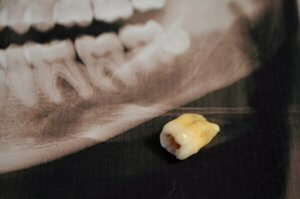
It is easy for a dentist to see if a child has more baby teeth than the 20 that are expected, and this can be a sign they will also have extra adult teeth. Approximately 30-50% of children with extra baby teeth will have extra teeth growing as adults. However, adults are five times more likely to have hyperdontia than children, so it’s not a hard and fast rule.
If the supernumerary teeth are found and extracted early enough, extraction could be the only treatment needed. Extra teeth that can be easily seen and accessed by your dentist can be removed just like any other tooth. When the extra teeth in your gums are impacted, so haven’t come through completely, dental surgery is likely to be needed to get the tooth out.
Our tooth extraction guide has more information about the process for removing teeth, including surgical extraction.
Braces
Crooked teeth often occur in people with extra teeth, since the supernumerary teeth push the others out of line. Once any hyperdontia teeth removal has been completed, your dentist may suggest orthodontic treatment with braces to straighten your smile.
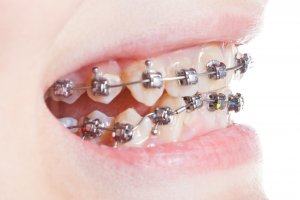
There are various types of braces to consider for orthodontic treatment.
Fixed braces consist of metal or clear brackets which are attached to the teeth and connected with wires and bands. They gradually move the teeth into the desired position, with regular adjustments at the dentist.
Another option is invisible braces such as Invisalign. These removable clear aligners fit over your teeth like a mouthguard and are very hard to notice. They are an inconspicuous and convenient option for teens and adults who don’t want their braces to be obvious to others.
If your dentist has recommended treatment with braces, you can read our complete guide to braces to get lots more information about the different options, and to find out what it’s like wearing them.
 Most affordable!
 - Up to 80% cheaper than Invisalign
- Buy now, pay later in interest-free instalments.
- Rated 4.5/5 on Trustpilot
- Starting at just 625 for single-arch treatment!
Caspersmile offers a convenient at-home solution for teeth straightening with their clear aligners. You can achieve a perfect smile in 3-5 months, wearing the aligners for 22 hours a day.
Caspersmile’s treatment is overseen by UK-licensed dentists, ensuring professional guidance throughout the process. The treatment starts with an at-home impression kit or a visit to a scan center, followed by a 3D preview of your future smile.
Every treatment comes with free teeth whitening, so you can brighten your smile while you straighten it!
 Best hybrid treatment
 - Hybrid in-office and remote treatment
- In-person visits with your orthodontist for safe, effective treatment
- Treats even complex cases of misalignment
- Various pricing options
Discover the flexibility and effectiveness of Impress Invisible Braces, the hybrid orthodontic solution that blends in-person care with the convenience of remote appointments. Suitable for both kids and adults, Impress offers a range of treatment options designed to cater to various needs, from mild to severe cases of misalignment. With the initial consultation happening in person, you’re assured of a tailored treatment plan that can address even the most complex orthodontic issues.
Impress Treatment Plans:
- Impress Super Light ($6,999): Perfect for mild cases, this plan promises results in up to 3 months, making it the quickest route to a better smile.
- Impress ($4,599): Designed for moderate cases, this option aims to perfect your smile within 4-10 months.
- Impress Plus ($5,599): Tailored for moderate cases requiring a bit more time, this plan spans 11-14 months.
- Impress Advanced ($6,999): The go-to choice for complex cases, offering comprehensive treatment over 11-24 months.
- Teens ($4,599): Specifically designed for teenagers, this plan addresses mild cases within 4-10 months, ensuring a confident smile during those crucial years.
- Impress Kids ($4,599): Offering orthodontic treatment for children, this plan covers a period between 8-18 months, setting the foundation for a lifetime of healthy smiles.
With flexible payment plans available, starting your journey to a perfect smile has never been easier or more accessible. Whether you’re looking for a quick fix or need extensive treatment, Impress Invisible Braces provide a tailored solution that meets your needs and budget. Click below to get started!
 Best value
 - Free retainers and whitening
- Nighttime aligners available
- 0% interest finance options
£1,395£1,295 or £83.33/month
NewSmile is a Canadian company that brought its clear aligners to the UK market in 2022. NewSmile aligners are made from the clearest material and the company offers excellent service at the best price.
They don’t have any physical locations, so you’ll need to purchase an aligner kit to get started. One of their Impression Specialists will guide you through the process on a video call when you’re ready.
NewSmile aligners are very affordable, costing just £1,395 (currently discounted to £1,295). But even better, this price includes whitening foam to use in your aligners, plus your first set of retainers!
Choose their daytime package for treatment in 4-6 months, or nighttime aligners for a more discreet treatment that takes 8-10 months. Both options come with 0% interest payment plans available.
Fillings, crowns, and veneers
When left for a long time, extra teeth in the roof of your mouth or gums can cause damage to the surrounding teeth. Brushing and flossing becomes very difficult when there are teeth in awkward positions and places that are hard to reach.
Following any extractions that your dentist recommends, you might need to have extra treatment to get your smile into great shape. A filling will be used to plug any small cavities, a crown can cover a tooth that has been badly affected by decay, and veneers can be used to cover misshapen teeth that might result from hyperdontia.
Is hyperdontia NHS treatment available?
This depends on the treatment in question. As is, the general rule for NHS dental treatment, if extractions and other work are deemed medically necessary they are likely to be covered. For under-18s the treatment will be free, and luckily a lot of hyperdontia treatment can be completed at a young age.
In cases where the extra teeth don’t become apparent until you’re older, for example with extra wisdom teeth, your dentist will make an assessment as to whether treatment is strictly necessary and can be covered by the NHS schedule of treatment charges.
Necessary extractions, fillings and crowns will be covered by the NHS, but braces are less often provided. Even then, only metal braces are offered on the NHS. Other styles (like invisible braces) must be funded privately. Veneers to cover misshapen teeth are considered a cosmetic treatment and are therefore not covered by the NHS.
Conclusion
Having hyperdontia isn’t something that should be a big worry, even though the idea of having extra teeth growing in your mouth is rather strange. Especially if detected early on in a dental check-up, hyperdontia treatment should be simple and effective.
It’s usually necessary to extract supernumerary teeth, but when done around the age of seven all of the other teeth should come through without any problems. If the extra teeth are spotted later on in life, they can still be removed, possibly surgically. Common follow-up treatments such as braces and fillings are well-practised and may be available on the NHS, but you’ll need to speak to your dentist to confirm a treatment plan.
NCBI: Genetic background of supernumerary teeth. Consulted 22nd July 2019.
British Dental Journal: Supernumerary molars. Consulted 22nd July 2019.
ScienceDirect: Learn more about hyperdontia. Consulted 22nd July 2019.