


Dental implants depend on one thing above all else: healthy bone. The implant post needs to be fully surrounded by enough bone to anchor it securely and support the forces of chewing. When there is not enough bone in the right place, a bone graft can rebuild the foundation.
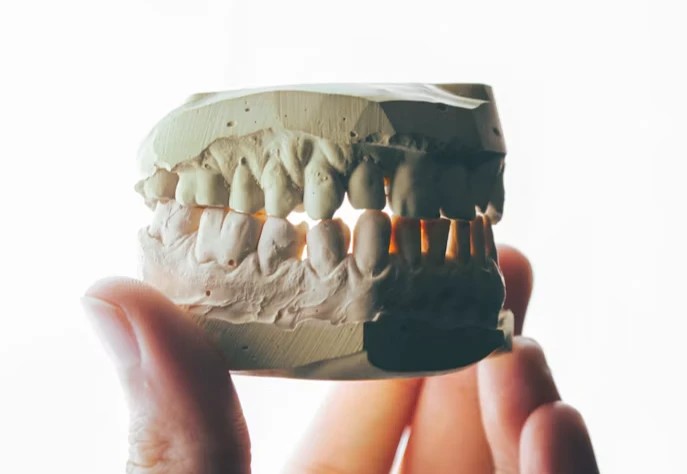
For many patients, hearing that they need a graft is unexpected. This article explains why bone loss happens, who typically needs grafting, the main types of procedures, how surgeons decide, and what to expect during recovery.
Why Bone Is Lost After a Tooth Is Removed
The jawbone around a tooth exists to support that tooth. Once the tooth is gone, the bone begins to remodel and shrink, and the changes happen faster than most people expect.
A systematic review by Tan and colleagues, published in Clinical Oral Implants Research, examined changes after extraction and found that human studies showed horizontal bone loss of 29 to 63% and vertical bone loss of 11 to 22% within six months of extraction, with the fastest reductions in the first three to six months. In other words, the ridge tends to become narrower before it becomes shorter, and much of the change happens early.
This is why timing matters. Talking to an implant surgeon soon after, or even before, an extraction can open up options to preserve bone. Oral surgeons such as those at drjaypmalmquist.com can assess bone volume with 3D imaging and recommend whether grafting is needed at the time of extraction or later.
Who Typically Needs a Bone Graft?
You may need grafting if:
- A tooth was removed months or years ago and the ridge has shrunk
- Gum disease has destroyed bone around teeth
- A tooth was lost due to infection, trauma or a failed root canal
- You have worn dentures for a long time, which can accelerate ridge loss
- Implants are planned in the upper back jaw, where the sinus sits close to the bone
- The front of the mouth needs enough bone thickness for a natural-looking result
Not everyone needs a graft. Many patients have adequate bone, and in some cases shorter or angled implants can avoid grafting altogether. Your surgeon will discuss the trade-offs.
How Your Surgeon Decides
The decision usually starts with a cone beam CT scan, a type of 3D X-ray that shows the height, width and density of the bone, along with nearby structures such as nerves and the sinuses. Your surgeon uses this information to plan the ideal position for the implant, based on where the final tooth needs to sit, and then checks whether there is enough bone in that exact spot.
If the bone is thin, short or has defects, they will consider whether a graft is needed, which type would work best, and whether it can be done at the same time as implant placement or needs to heal first. Your medical history, smoking status and personal preferences also play a part. A clear explanation of this planning process is a good sign that your surgeon is designing treatment around long-term results.
Types of Graft Material
Grafts act as a scaffold that the body gradually replaces with its own bone. The main sources include:
Autografts use bone from your own body, often from another area of the jaw. They contain living cells and are considered highly effective, but they require a second surgical site.
Allografts use processed, sterilized human donor bone from a tissue bank. They avoid a second surgical site and are widely used.
Xenografts come from animal sources, most often bovine, and are processed to leave only the mineral structure. They are resorbed slowly, which can help maintain volume.
Synthetic grafts are made from biocompatible materials such as calcium phosphate.
Many grafts are covered with a membrane that keeps gum tissue from growing into the area while bone forms.
Common Grafting Procedures
Socket preservation involves placing graft material into the socket immediately after extraction to limit bone loss. A systematic review and meta-analysis of randomized trials concluded that alveolar ridge preservation is effective in limiting the natural ridge reduction that follows extraction, compared with extraction alone.
Ridge augmentation rebuilds the width or height of a jaw ridge that has already shrunk, so an implant can be placed in the ideal position.
Sinus augmentation (sinus lift) adds bone to the upper jaw beneath the sinus floor, where the bone is often thin after back teeth are lost.
Block grafts use a solid piece of bone, secured with small screws, to rebuild larger defects.
What Recovery Looks Like
Recovery from minor grafts, such as socket preservation, is usually similar to a tooth extraction. Expect mild swelling and soreness for a few days, managed with over-the-counter or prescribed pain relief and cold compresses.
Larger grafts may involve more swelling and a longer healing period. You will typically be advised to:
- Avoid smoking, which significantly impairs healing
- Eat soft foods and avoid chewing on the graft site
- Follow instructions for rinsing and medications carefully
- Avoid pressure on the area from dentures until cleared by your surgeon
- Attend follow-up appointments so healing can be monitored
After a sinus lift, you may also be asked to avoid blowing your nose forcefully or sneezing with your mouth closed for a period, to protect the healing area.
Graft healing generally takes several months before an implant can be placed, although in some cases a graft and implant are placed at the same time.
Risks and Possible Complications
Like any surgery, bone grafting carries some risk. Possible issues include infection, swelling, bruising, exposure of the graft or membrane through the gum, and in some cases the graft not integrating as well as hoped, which may mean additional grafting is needed. Sinus procedures carry a small risk of sinus membrane tears or sinus irritation. Following aftercare instructions, avoiding smoking and keeping follow-up appointments all help reduce these risks.
Is Bone Grafting Worth It?
Grafting adds time and cost to implant treatment, so it is reasonable to ask whether it is necessary. In many cases, it is the difference between an implant that is well supported and natural-looking, and one that is compromised or not possible at all. Adequate bone helps the implant integrate, supports the gum tissue around the crown, and contributes to long-term stability.
Questions to Ask Your Surgeon
- How much bone do I have, and where is it lacking?
- What type of graft material do you recommend, and why?
- Can the implant be placed at the same time as the graft?
- How long will healing take before the next step?
- Are there alternatives, such as shorter implants, that could avoid grafting?
The Bottom Line
Bone loss after tooth removal is natural and often rapid, but it does not have to rule out implants. Modern grafting techniques can rebuild or preserve the bone needed for a strong, lasting result. If you are planning an extraction or considering implants, ask about bone health early, because the sooner it is addressed, the simpler treatment tends to be.