


Complete dentures have helped millions of people regain a full smile. But many denture wearers live with daily frustrations: dentures that slip while talking, food trapped underneath, sore spots that never quite go away, and a growing reliance on adhesive. If that sounds familiar, you are not alone, and you may have more options than you think.
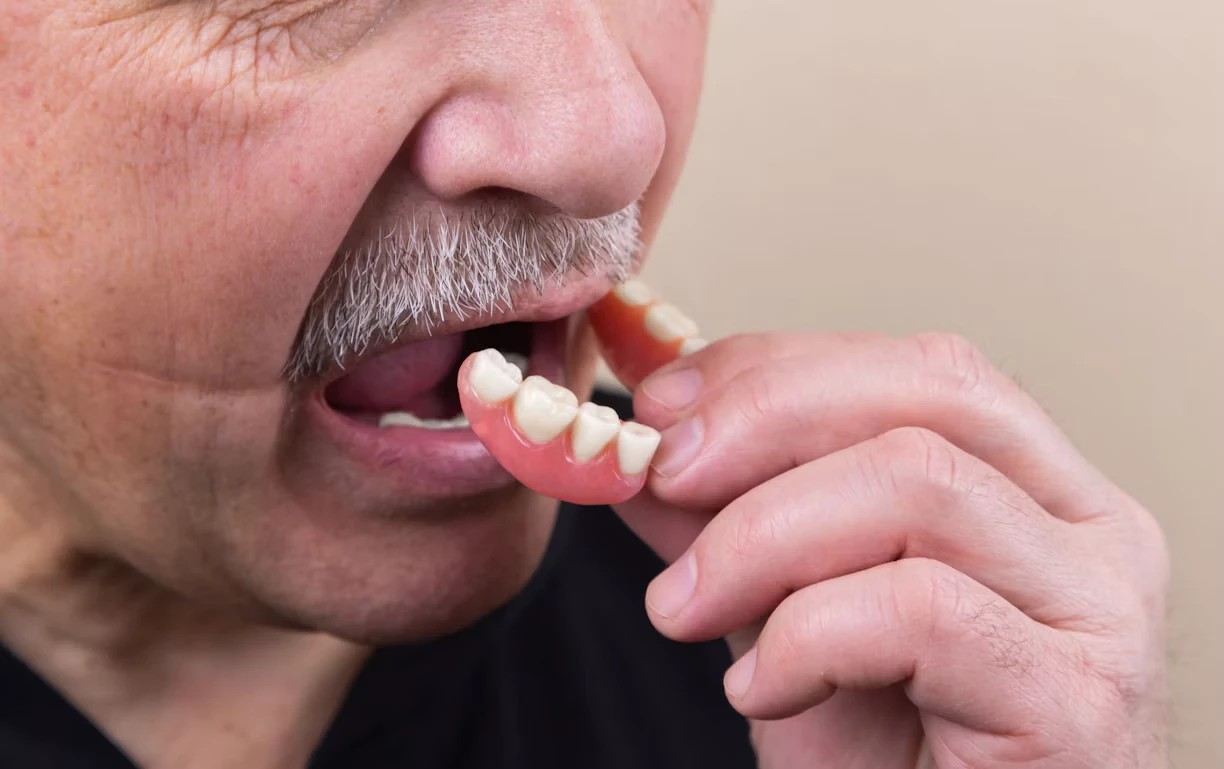
This article explains why dentures often loosen over time, the signs it may be worth exploring implant-based alternatives, what those alternatives involve, and what life looks like afterward.
Why Dentures Get Looser Over Time
Natural tooth roots stimulate the jawbone every time you chew. Once teeth are removed, that stimulation stops, and the bony ridge that once held the teeth gradually shrinks. A conventional denture sits on top of the gums and rests on this ridge, so as the bone changes shape, the fit changes too.
This is why dentures that felt secure when first made can begin to rock, rub or slip a few years later. Relines and remakes can restore the fit, but they do not stop the underlying bone loss.
Upper vs Lower Dentures
Many people notice their upper denture feels reasonably secure while the lower one is a constant struggle. There is a reason for this. An upper denture covers the palate, which provides a large surface area and suction to help hold it in place. A lower denture sits on a narrow, horseshoe-shaped ridge, and the tongue and cheek muscles are constantly pushing against it. As the lower ridge shrinks, there is even less for the denture to grip.
This is why implant support often makes the most dramatic difference in the lower jaw, and why some patients choose to stabilize only their lower denture at first.
Signs It May Be Time to Explore Other Options
Consider talking to an implant dentist if you notice any of the following:
Your denture moves when you speak or laugh. Clicking, shifting or worrying that your teeth might drop can make social situations stressful.
You rely heavily on adhesive. Needing more adhesive, more often, is a clear sign the fit has deteriorated.
You avoid certain foods. Many denture wearers give up crunchy fruits, raw vegetables, nuts or steak. Over time, a restricted diet can affect nutrition and enjoyment of meals.
You have recurring sore spots. Pressure points or ulcers that return after adjustments often indicate ongoing changes in the ridge.
Your face looks different. As bone is lost, the lower face can appear shorter and the lips can lose support, sometimes making people look older than they are.
You need frequent relines or replacements. If you seem to be back in the chair every year or so for fit issues, it may be time for a more stable foundation.
If several of these sound familiar, a consultation with an implant-focused practice such as ARCHPOINT Implant Dentistry can help you understand whether your bone and health make you a candidate for an implant-supported option.
Option 1: Implant-Retained Overdentures
An overdenture is a removable denture that snaps onto a small number of dental implants. The implants act as anchors, dramatically improving stability while keeping the convenience of a denture that can be removed for cleaning.
This approach is well supported by research for the lower jaw. In 2002, an expert panel at McGill University issued what became known as the McGill Consensus, which stated that conventional dentures were no longer the most appropriate first choice for a toothless lower jaw, and that a two-implant overdenture should become the first choice of treatment. A follow-up statement from York in 2009 reinforced this, noting that while a two-implant overdenture is not the gold standard of implant therapy, it is the minimum standard that should be sufficient for most people when performance, satisfaction, cost and clinical time are considered.
Overdentures use attachments that wear over time, so the small retentive inserts typically need replacing periodically. This is a quick, routine appointment.
Option 2: Fixed Full-Arch Implant Bridges
For people who want teeth that stay in permanently, a fixed full-arch bridge is attached to several implants (commonly four to six per jaw) and can only be removed by the dentist. You might hear these described using names such as “All-on-4” or “All-on-X.”
Fixed full-arch solutions feel and function more like natural teeth. There is no palate covering the roof of the mouth on an upper fixed bridge, which many people find improves taste and comfort. In some cases, a provisional set of teeth can be attached on the same day as surgery, with the final bridge fitted after healing.
The trade-offs are a more involved surgical procedure, a higher cost, and a different cleaning routine, since you cannot take the teeth out to clean them. Specialized brushes and water flossers become part of daily care.
Who Is a Good Candidate?
Most healthy adults can be considered for implant-supported teeth, including people who have worn dentures for many years. Your dentist will assess:
- The amount and quality of remaining jawbone, usually with 3D imaging
- Your general health, including diabetes, heart conditions and medications that affect bone
- Smoking habits, which can affect healing
- Your goals, budget and preference for removable or fixed teeth
Even people with significant bone loss may have options through grafting or specially angled implant techniques.
What to Expect
The journey typically starts with a consultation and 3D scan, followed by a treatment plan. Surgery is often completed in a single visit under local anesthetic with sedation. Healing usually takes a few months before the final teeth are made, during which you will wear temporary teeth. Long-term, you will need regular checkups and professional cleanings to keep the gums and implants healthy.
Living With Your New Teeth
Most patients need a short adjustment period. Speech may feel slightly different for the first few days or weeks as your tongue adapts, and your surgeon will usually recommend a soft diet while the implants heal. Once healing is complete, many people are able to return to foods they had avoided for years.
Daily care matters just as much as it did with natural teeth. Overdentures should be removed and cleaned, with the attachments and gums around the implants brushed gently. Fixed bridges need careful cleaning underneath, where food can collect. Regular professional maintenance visits allow your dentist to check the implants, clean areas that are hard to reach, and catch any early signs of inflammation.
The Bottom Line
Loose dentures are common, but they are not something you have to live with forever. Whether you choose a removable overdenture or a fixed full-arch bridge, implant support can restore stability, comfort and confidence at mealtimes and in conversation. If your current denture is limiting your life, an assessment is a worthwhile first step.